numbers and benchmarks
What markup and labor rate do I need on stems and hard goods to hit a real margin?
Wholesale cost, markup multiple, hard goods, design hours and installation labor each carry their own math. Here is how the numbers stack into a defensible wedding price.
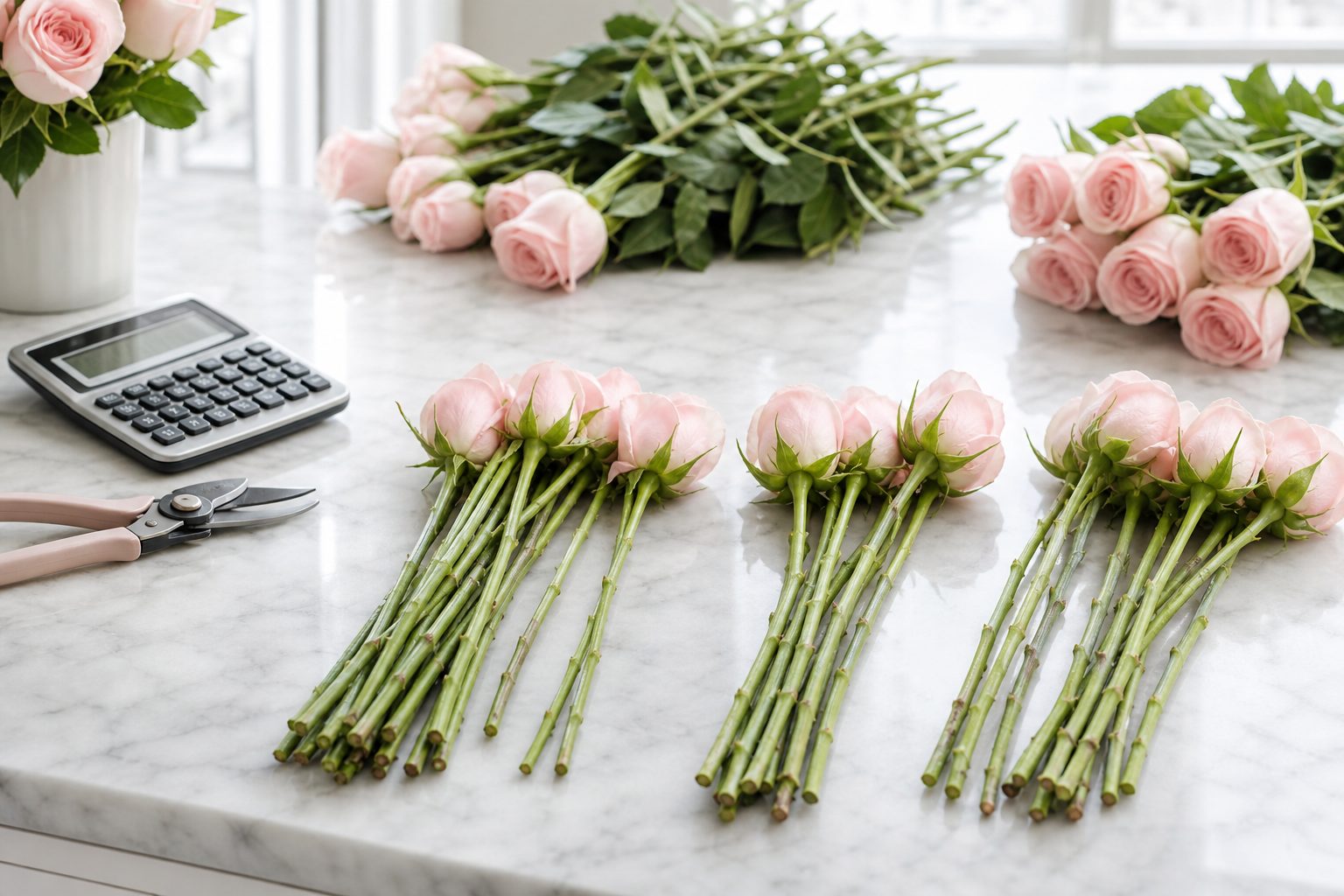
There is no single markup that produces a profitable wedding, and that is the first thing to accept. A wedding price is four separate calculations stacked together: fresh product at a multiple of wholesale, hard goods handled on their own terms, design labor billed by the hour it truly takes, and installation labor billed at a crew rate. Delivery and vehicle cost sit on top as their own line.
The multiples most US studios work from land between 3 and 4 times wholesale on fresh flowers, roughly 2 to 2.5 times on hard goods, and a design labor rate that recovers the designer's wage plus the studio overhead per hour. Those are working conventions, not laws, and the reason the range is wide is that a 3.5x on stems has to cover very different things in a studio with a rented cooler than in one working out of a home garage.
What matters is that you can read a finished quote back and say what percentage of it is gross margin. Below is how to build it so you can.
Wholesale stem cost as the base of every calculation
Every number downstream is wrong if the base is wrong. Wholesale stem cost is not the bunch price on the invoice. It is the bunch price divided by the stem count in that bunch, plus your share of freight, plus your shrink allowance.
Work an example. Assume garden roses at $45 a bunch of 10. That is $4.50 a stem before anything else. Add freight: if a $600 order carries $75 in shipping and box charges, that is 12.5 percent, so the stem is now $5.06. Then add shrink. If you routinely lose one stem in ten to blown heads, bent necks and short cuts, divide by 0.9 and the true landed cost is $5.63.
That is 25 percent above the invoice line, and it is the number your markup should multiply. These are assumptions, so substitute your own freight percentage and your own honest shrink rate. Most studios underestimate shrink because they never count the compost bucket.
Count the stems, not the recipe you remember
A bridal bouquet you describe as "about 40 stems" is very often 55 when someone counts it. At $5.63 a stem, that gap is $84 in unbilled product on one piece. Across a wedding with twenty pieces, guessing high on your memory and low on your invoice is the most common way a studio produces beautiful work and no profit.
Keep reading: How does a summer install actually go when the venue has no cooler and no shade?
Common markup multiples and what each one has to cover
The multiple is not profit. It is the recovery of everything you spend that is not the flower itself. Look at what each level is actually paying for.
| Multiple | What it can cover | Typical fit |
|---|---|---|
| 2x | Product cost and modest overhead only | Too thin for weddings, common in retail bunches |
| 3x | Product, shrink, cooler, studio rent, supplies | Volume studios with labor billed separately |
| 3.5x | The above plus a real owner draw | The common wedding default |
| 4x | The above plus substitution risk on hard to source varieties | Peak season, imported or specialty product |
Note the phrase "with labor billed separately." A 3x that also has to absorb your design hours is not a 3x. If you are folding labor into the multiple, you would need something closer to 5x to end up whole, and clients notice a 5x line item far more than they notice a design fee.
Pricing hard goods separately from fresh product
Hard goods do not spoil, so they do not need shrink coverage, and they do not need the same multiple. Vases, candles, taper holders, ribbon, foam alternatives, chicken wire, cages and mechanics belong in their own bucket.
Split them two ways. Consumables are used up and never come back: floral tape, wire, adhesive, water tubes, zip ties, twine. Bill those at cost times roughly 2 to 2.5, or fold them into a per piece mechanics charge so you are not itemizing $1.20 of wire.
Rentals are yours and return to the studio. Price a rental vessel to recover its purchase cost over a realistic number of uses, plus breakage. A $28 footed compote used twelve times before it chips or vanishes needs $2.33 per use just to break even. Charge $8 to $12 per compote and you are covering the buy, the washing labor, the storage and the ones that never come home.
Keep reading: How do I build a stem count recipe for a bridal bouquet before I quote the price?
Design labor: hours per piece and how to time yourself
You cannot price labor you have never measured. For two weddings, put a timer on the bench and record actual minutes per piece type, including processing and cleanup, not just the assembly.
Then set an hourly design rate that recovers the wage plus overhead. If a designer costs you $25 an hour fully loaded with payroll taxes, and your studio overhead runs $3,200 a month against 120 productive design hours, that is $26.67 an hour of overhead. Add a profit margin and a billable design rate somewhere around $65 to $75 an hour is defensible arithmetic, not a number you picked.
A worked bouquet
- Stems: 55 at $5.63 landed = $309.65
- Markup at 3.5x = $1,083.78 for product, which is clearly wrong for a bouquet
That result tells you something useful. A 3.5x applied to a stem heavy bridal bouquet produces a number the market will not pay, which is why many studios run a lower multiple, near 3x, on personal flowers and recover the difference through design labor. At 3x that bouquet prices at $928.95 in product terms, still high, which is the honest signal that 55 stems of garden roses is a $900 bouquet and the conversation with the client is about stem count, not about your pricing.
Swap 20 of those roses for spray roses at $2.10 landed and the base drops to $239.20, product at 3x is $717.60, and the client still gets the look. That is the entire value of pricing from a real stem count: you can negotiate the recipe instead of shaving your margin.
Installation and crew labor as its own line
Installation is not design. It happens on site, under time pressure, often at a ladder, and it usually requires more bodies than the studio bench does.
Bill it as a crew hour rate: number of people times hours on site, from van departure to van departure. If your install rate is $55 per person hour and a flip wedding takes a four person crew for five hours plus a two person strike for two hours, that is 20 person hours plus 4, so 24 at $55, which is $1,320. Strike after midnight should carry a premium, because that is when crew wages get expensive and people quit.
Anything overhead, anything requiring a lift, and anything in a venue with a shared freight elevator deserves an added hour in the estimate before you sign.
See how StemCount handles this for wedding and event floristry
Delivery, vehicle and cooler cost per event
The van is a cost center, not a rounding error. Build a per event figure from real annual spend: insurance, registration, maintenance, tires, fuel and either a lease payment or depreciation on the purchase.
Assume $7,200 a year all in, across 40 events. That is $180 per event before mileage. Add fuel for a 90 mile round trip at 14 miles per gallon and $3.60 a gallon, which is $23.15. So $203 in vehicle cost on that wedding, and a $150 delivery fee is losing you money before anyone unloads a bucket.
Cooler cost belongs in overhead, not per event, unless you rent a refrigerated truck for a specific wedding, in which case it is a direct cost and gets passed through with a handling markup.
Reading the finished quote back as a margin percentage
Add the four buckets, then check the whole thing. Take total price, subtract landed product cost, subtract hard goods cost, subtract every wage dollar you will actually pay including your own, and divide what remains by total price.
If that number is under 15 percent, the wedding is a job, not a business. Somewhere in the 25 to 35 percent range is where a studio can absorb one bad sourcing week, one broken cooler compressor and one wedding where the crew ran three hours long.
Do this check before you send the proposal, not after the event. A quote that reads back at 9 percent is a quote you can still change.
Make the math run itself
None of this is hard arithmetic. It is just arithmetic you have to redo on every recipe change, in the middle of a consultation, while a client asks what happens if she adds four more tables.
StemCount does that redo instantly. You build the recipe stem by stem, it applies your landed costs, your multiples, your design and install rates, and it shows the margin on the quote while you are still talking. Price your next wedding in it and see what your current pricing has actually been earning you.
Read also
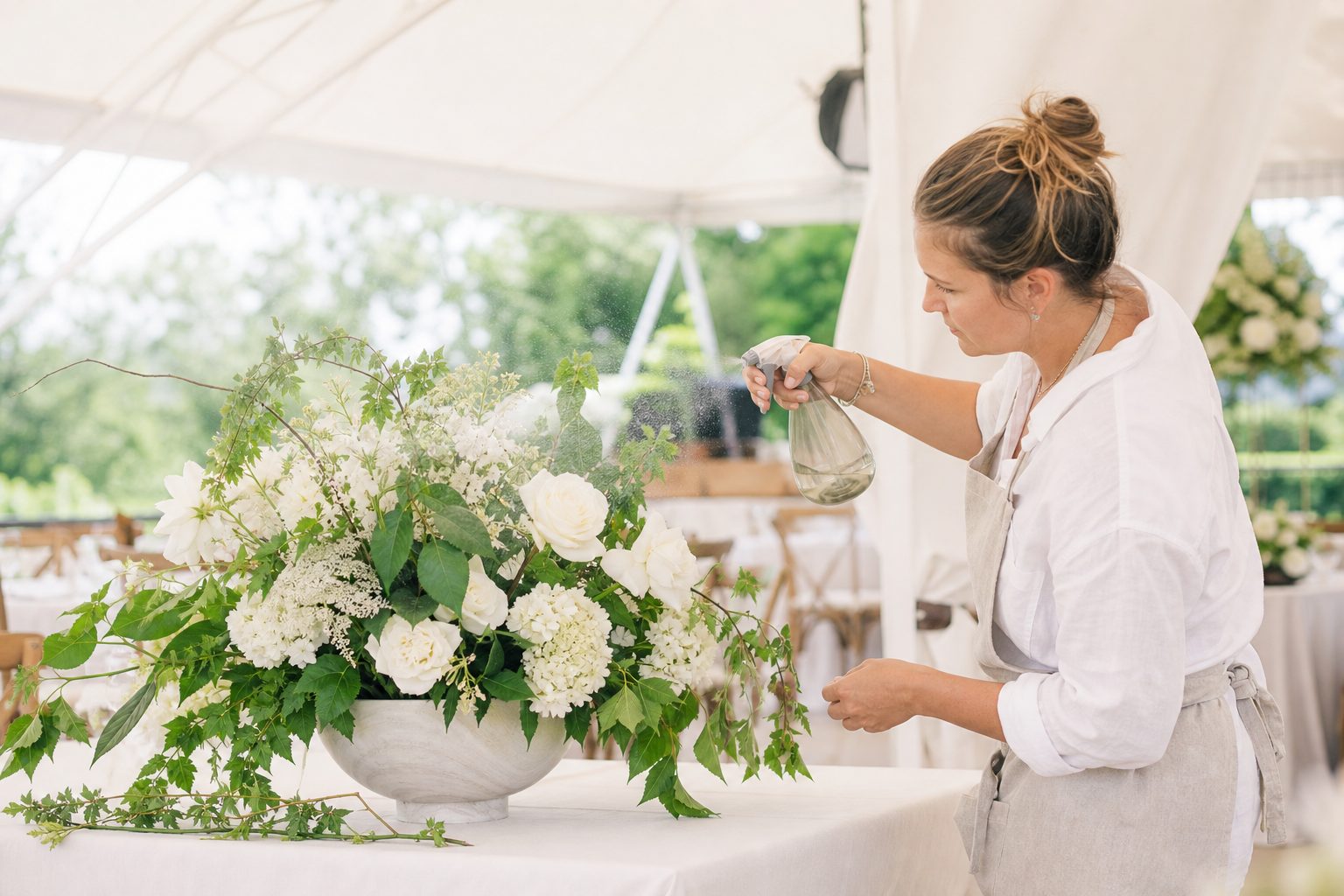
How does a summer install actually go when the venue has no cooler and no shade?
Notes from a hot outdoor build: hydration timing, which varieties collapse first, van heat management and the design choices that hold up through a full afternoon.
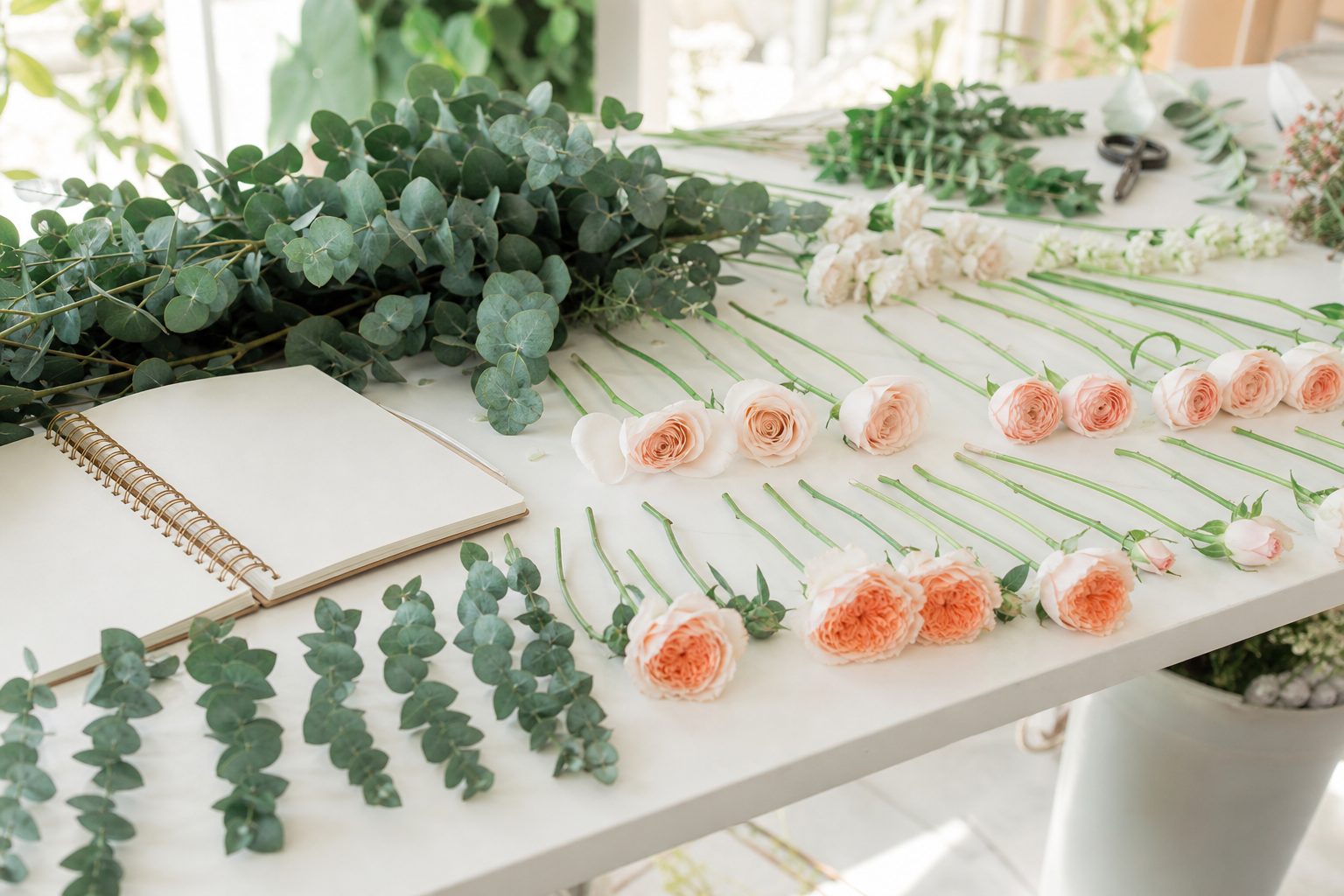
How do I build a stem count recipe for a bridal bouquet before I quote the price?
A recipe starts with focal, secondary, filler and greenery counts, then converts to wholesale bunches. Here is how to build one that survives substitutions and a real quote.
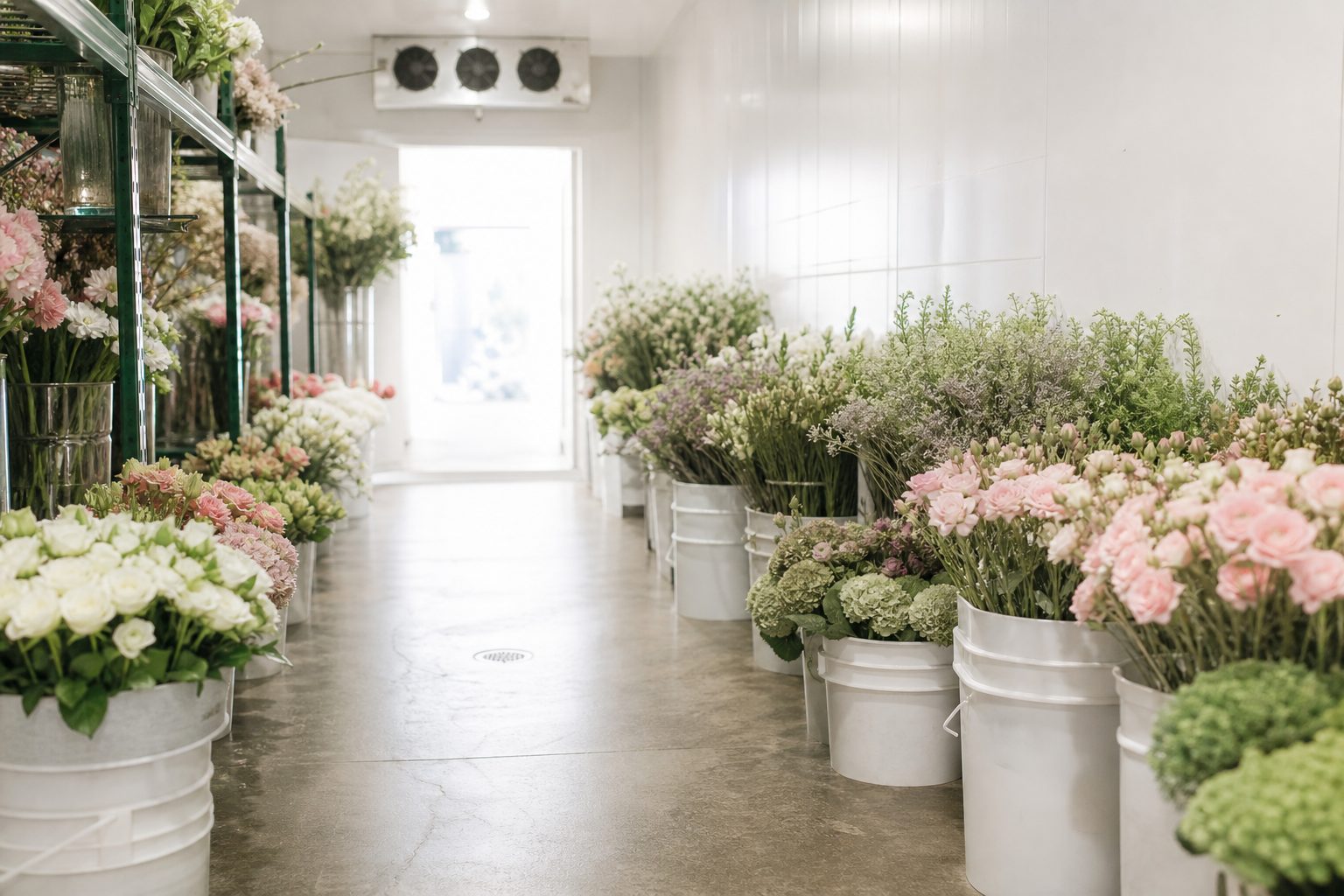
What is the real difference between a wholesale line, a local grower and a flower market?
Three sourcing channels, three different cost structures, minimums and lead times. A side by side look at what each one actually asks of a small wedding studio.