case study
How did one studio rebuild a two hundred guest wedding order after a shipment arrived short?
A focal variety arrives half short two days out. Follow the recount, the substitution call, the client conversation and the credit claim that kept the design intact.

The studio rebuilt it by counting first and calling second. Boxes landed Thursday morning for a Saturday wedding, one hundred eighty of a focal dahlia were invoiced and ninety four arrived. Instead of phoning the client in a panic, the owner spent forty minutes recounting every recipe the dahlia touched, discovered the shortage only broke two of eleven pieces in a visible way, and sourced a substitute for those two alone.
The client conversation lasted nine minutes. The wholesaler credit came through the following week at two hundred eighty two dollars. The design read the same in photographs. Nothing about that outcome was luck. It came from a recipe that listed every stem by piece, which meant the studio could see the shortage as a specific problem rather than a general emergency.
Here is the sequence, hour by hour, with the numbers and the decisions.
The delivery check that caught the shortage on arrival
The freight arrived at 7:40 on Thursday. Studio rule: no box goes into the cooler unopened and no delivery is signed clean until stems are counted against the packing list.
The count went bunch by bunch. Dahlias ship in bunches of five or ten depending on the farm, and the box tally read nineteen bunches where the invoice said thirty six. Two bunches showed heat damage on the outer guard petals, salvageable but not for a head table. Working count: ninety four usable focal stems against one hundred eighty ordered.
Three things happened before 8:15, and the order matters.
- Photographs. Every box label, the packing slip, the short bunches laid out on the bench, and a wide shot showing the box seal intact. Timestamped by the phone.
- A written note on the delivery receipt: short shipment, count disputed, signed with the time. A clean signature makes a claim harder.
- An email to the wholesaler rep before nine, with the photos attached and the invoice number in the subject. Not a call. Email creates the record.
Most wholesaler claim windows are twenty four hours from delivery, some shorter for perishables. Nothing in the rest of this story works if that window closes.
Keep reading: Where are wedding flower costs and client expectations heading for the next booking season?
Recounting the recipe to find what the shortage really broke
The instinct is to think, I am eighty six stems short, therefore the wedding is eighty six stems worse. That is almost never how it lands. Shortages break specific pieces, and the whole job is finding out which.
The dahlia appeared across the event like this:
| Piece | Qty | Dahlia per piece | Total dahlia |
|---|---|---|---|
| Ceremony arch, two corners | 2 | 21 | 42 |
| Head table garland runs | 3 | 16 | 48 |
| Guest table low bowls | 18 | 3 | 54 |
| Bridal bouquet | 1 | 9 | 9 |
| Bridesmaid bouquets | 5 | 4 | 20 |
| Boutonnieres and pins | 0 | 0 | 0 |
| Buffer | 7 | ||
| Ordered | 180 |
Ninety four stems will not cover that. But rank the pieces by how much the dahlia carries them, and the answer sharpens fast. In the eighteen low bowls, three dahlias per bowl sit among nine other ingredients and read as texture at four feet away. In the two arch corners, twenty one stems each are the focal mass a guest photographs from ten feet.
So the allocation went: arch corners fully covered at forty two, bridal bouquet at nine, bridesmaid bouquets at twenty. That is seventy one. Remaining twenty three stems went into the head table garlands at roughly eight per run instead of sixteen. The guest bowls got zero dahlias and a substitute instead.
Framed that way, the shortage did not break eighty six stems of design. It broke two elements: the density of three garland runs, and the focal in eighteen low bowls.
The rule the studio now uses
Protect the pieces that appear in the first look, the ceremony photographs and the couple's hands. Dilute the pieces seen at conversational distance in low light. A guest at table fourteen at nine at night is not comparing the bowl to a mood board.
Choosing substitutes by form and color, not by name
The wholesale market at seven in the morning two days out does not have your variety. It has whatever is on the truck. Naming a variety back at the buyer wastes the call.
What the studio asked for instead: an open faced round bloom, three to four inches across, in a warm blush moving to peach, cut open rather than tight, in quantities of at least eighty. That description brought back three real options, and the buyer could answer in under a minute.
- Form. Round and open, spiky, spray, umbel, spike. Match this first. A cafe au lait dahlia and a garden rose share a silhouette. A dahlia and a stock stem do not.
- Scale. Bloom head diameter within roughly half an inch, or the recipe count changes. A smaller head means more stems for the same visual mass.
- Value. How light or dark, more than the hue name. Photographs read value before color.
- Vase life and hydration. Anything going into foam free installations at ten in the morning for a five o'clock ceremony needs to hold.
The substitute chosen was a blush garden rose at three dollars forty a stem against the dahlia's two dollars ten. Eighteen bowls at three stems each is fifty four stems, an added cost of seventy dollars twenty compared with the original. The studio absorbed it rather than reopening the price with the client, on the reasoning that seventy dollars was cheaper than a renegotiation two days out and a client who now feels managed rather than served.
Keep reading: What should be on my delivery day timeline for a ceremony and reception flip?
Making the client call and what the contract already allowed
The contract carried a substitution clause. Not a vague one. It stated that flower availability is subject to market and growing conditions, that the studio may substitute varieties of equivalent value, form and color to maintain the overall design intent, and that substitutions do not reduce the contract price.
That clause is the reason the call was information rather than negotiation. The owner still made it, because a couple who hears about a substitution from their photographer on the wedding day is a couple with a grievance.
The script was four beats. What happened, in one sentence, without blame. What is protected, named specifically: the arch, your bouquet, the bridesmaids. What changes, named specifically: guest table bowls swap to garden roses in the same blush. What it costs you: nothing. Then stop talking.
The bride asked one question, whether the arch would still look full. Answer was yes, and the reason was true: the arch was allocated first for exactly this reason. That is a much stronger answer than reassurance.
Filing the credit claim with the wholesaler
The claim went in on the Thursday and settled the following Wednesday. Eighty six stems at two dollars ten is one hundred eighty dollars sixty. The studio also claimed the difference on the substitute purchase, seventy dollars twenty, and a portion of the second pickup run. Settlement came at two hundred eighty two dollars as a credit against the next invoice rather than cash, which is standard.
What made it settle quickly:
- Timestamped photos from the morning of delivery, including the intact seal, which ruled out damage in the studio.
- The annotated delivery receipt.
- A one page claim listing invoice number, line item, quantity invoiced, quantity received, unit price, and the substitute receipt attached.
- No emotion in the email. Claims handled by a rep who likes you move faster than claims handled by a rep you shouted at.
Worth knowing: many wholesalers credit product only and decline consequential costs like extra labor or a second delivery run. Ask, but do not build your recovery around getting it.
See how StemCount handles this for wedding and event floristry
Reworking the design day timeline around a late replacement
The garden roses were picked up Friday at 11:00 rather than delivered Thursday, which cost the studio a day of hydration. Roses shipped dry need a fresh cut, a deep drink and cool time before they open, and eighteen bowls of tight roses on Saturday morning is a different failure.
The Friday plan moved. Processing shifted to the front of the day, roses in warm water in the workroom rather than straight to the cooler, so they would open. The eighteen bowls, originally Friday afternoon, moved to Saturday at 7:00 with a two person crew instead of one. Personals were built Friday as planned because the dahlias for them were already in hand. Load out held at 1:00 Saturday.
The lesson is not that everything shifted. It is that the timeline had enough slack in it to shift. A Friday afternoon that is already full at ninety percent capacity has nowhere to put an emergency.
What changed in the studio's ordering buffer afterward
The studio was already ordering a small buffer, seven stems on a hundred eighty, about four percent. That is a breakage buffer, not a shortage buffer, and it never had a chance here.
The new rules are tiered by risk rather than applied flat, because a flat fifteen percent on every line is an expensive way to solve a problem that lives in two or three lines.
- Focal varieties that carry a piece: order ten percent over recipe.
- Anything imported or single farm sourced: fifteen percent, and name a fallback variety in the ordering notes before the order goes out.
- Filler and greenery from reliable local supply: five percent.
- Any variety the studio has been shorted on twice in a year: split across two suppliers regardless of price.
On this event that would have meant eighteen extra dahlia stems at thirty seven dollars eighty. Cheaper than a Friday scramble.
The thing that made all of it possible
Every good decision in this story ran through one document: a recipe that listed which stems went into which piece, in what quantity, at what cost. Without it, ninety four stems against one hundred eighty is a crisis. With it, it is an allocation problem solved in forty minutes at a bench.
StemCount is built for that document. Recipes by piece, stem counts that roll into a wholesale order list with your buffer applied per line, and a delivery day timeline that shows where the slack actually is. Build the wedding from the stems, and the bad Thursday becomes a Thursday you can work through.
Read also
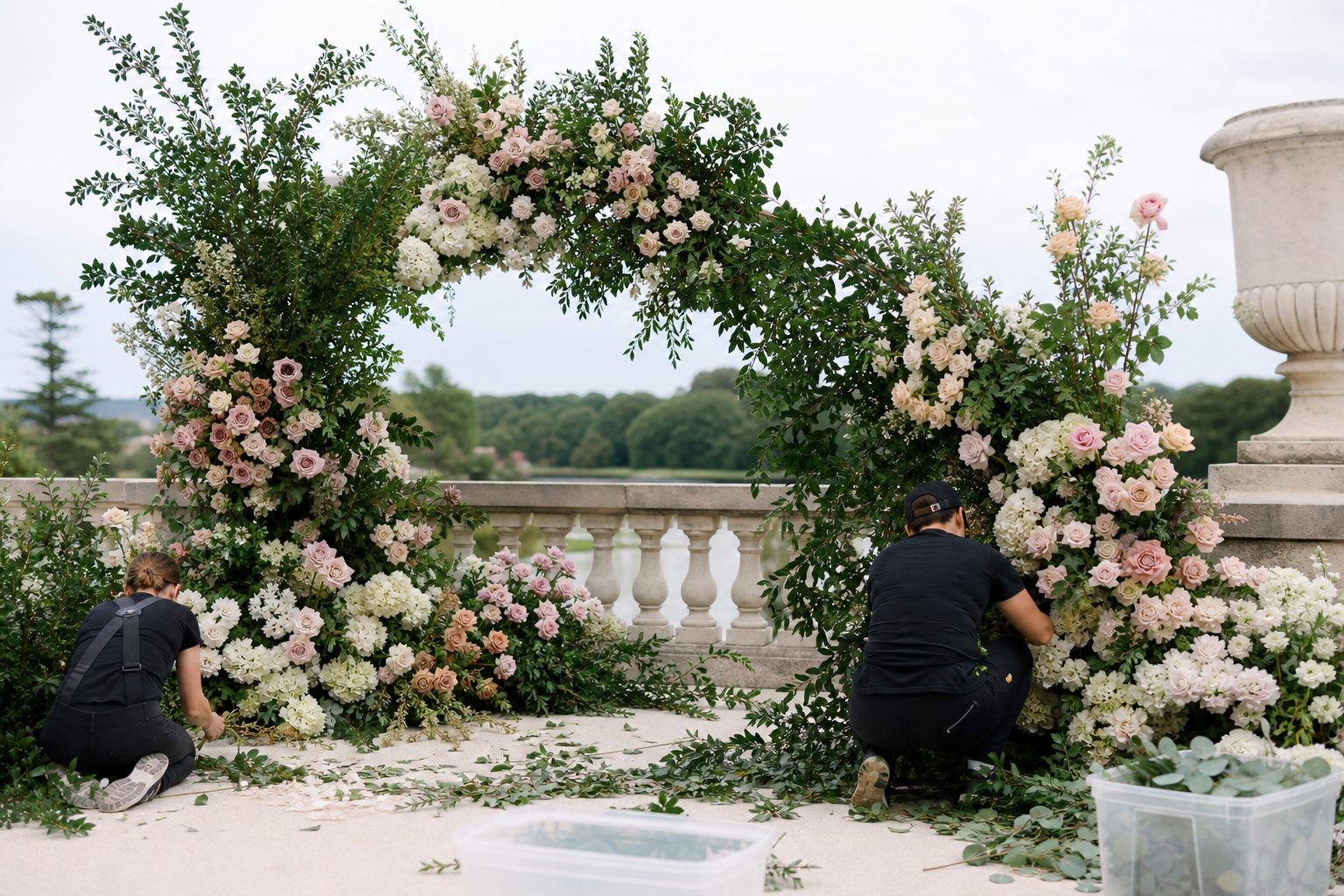
Where are wedding flower costs and client expectations heading for the next booking season?
Import routes, freight, holiday demand peaks and a shift toward installations over centerpieces are reshaping what a wedding quote has to absorb. Here is the outlook.
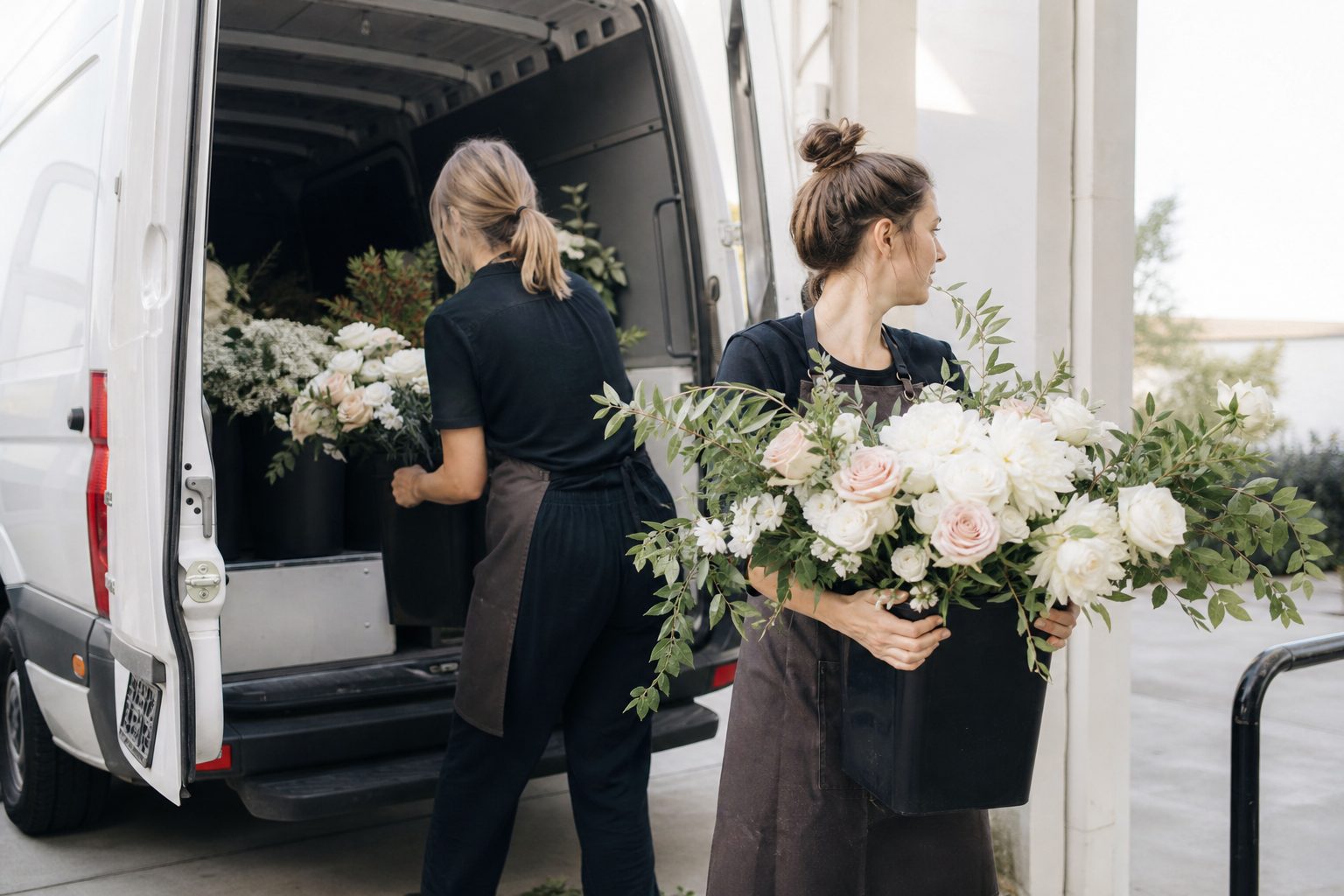
What should be on my delivery day timeline for a ceremony and reception flip?
A flip compresses install, strike and reset into a narrow window. This is the hour by hour checklist that keeps the crew, the venue and the buckets moving.
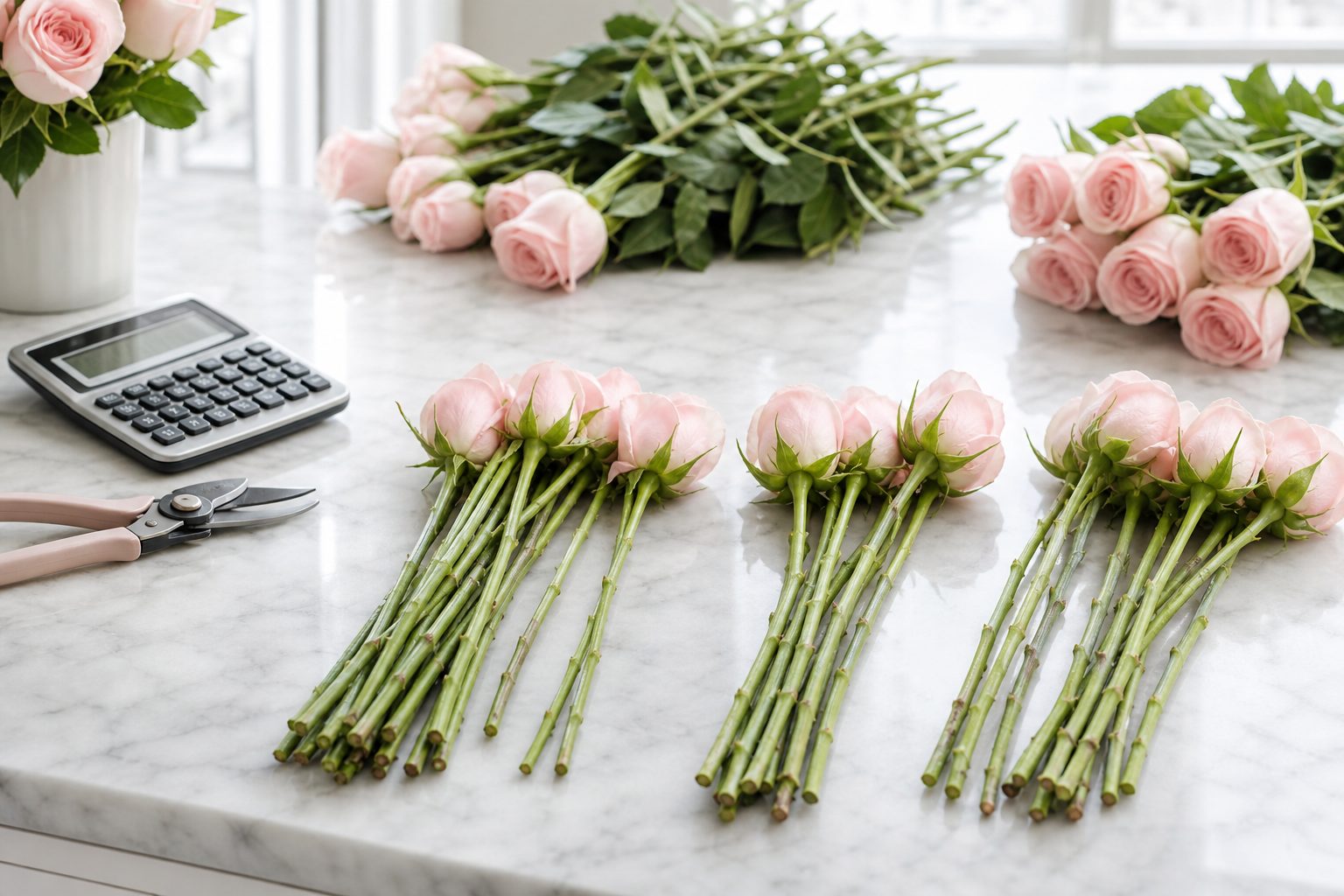
What markup and labor rate do I need on stems and hard goods to hit a real margin?
Wholesale cost, markup multiple, hard goods, design hours and installation labor each carry their own math. Here is how the numbers stack into a defensible wedding price.