trends and outlook
Where are wedding flower costs and client expectations heading for the next booking season?
Import routes, freight, holiday demand peaks and a shift toward installations over centerpieces are reshaping what a wedding quote has to absorb. Here is the outlook.
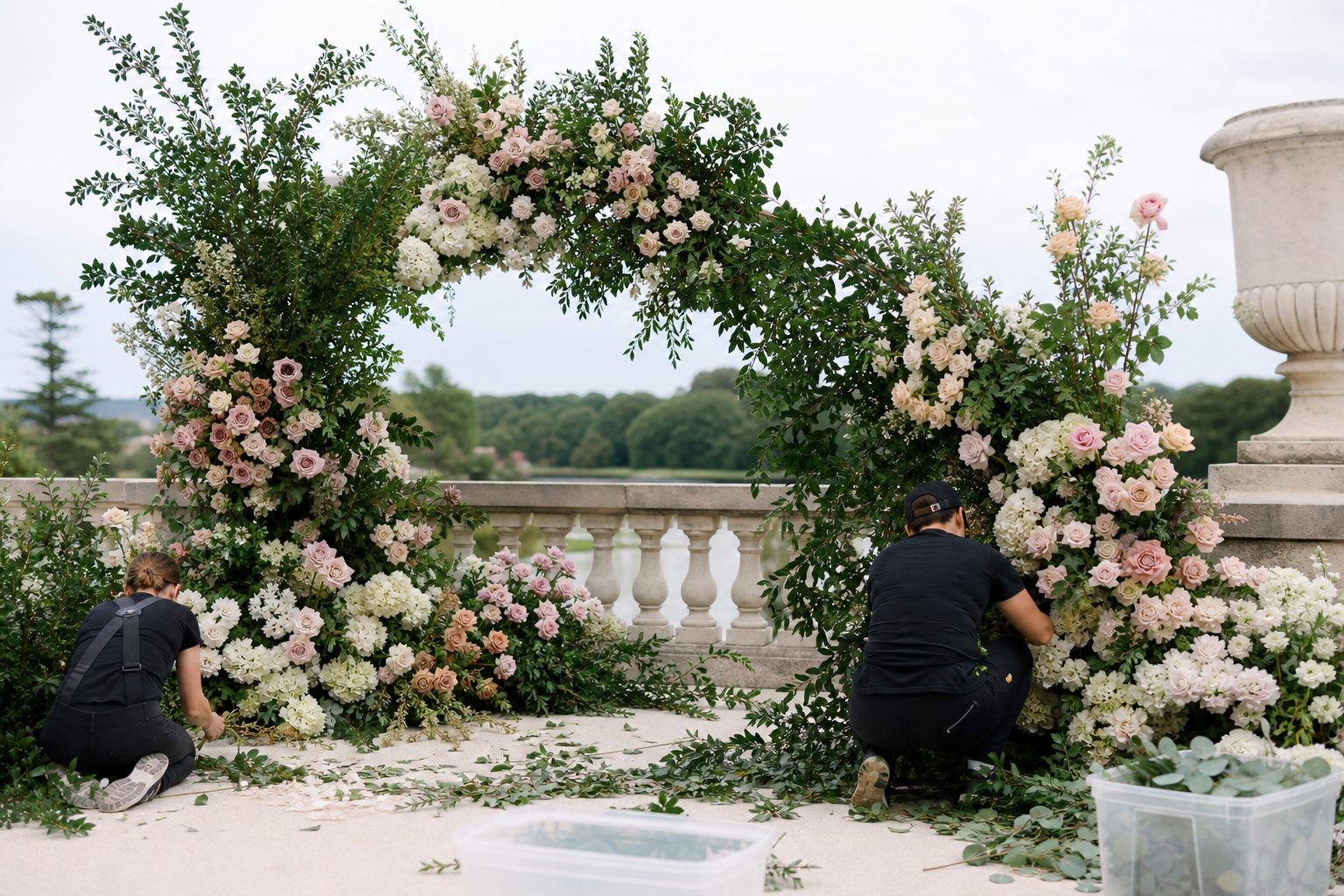
Costs are heading up unevenly, and expectations are heading toward volume. Those two pressures point in opposite directions, which is the whole difficulty of the coming booking season. The stem lines most exposed to freight and holiday demand will move most, while couples are asking for fewer centerpieces and more overhead and ceremony structure, which is a labor and hardware ask before it is a flower ask.
The studios that stay profitable through it will not be the ones who guess a percentage and add it. They will be the ones who quote from actual stem counts, price installation labor as its own line, and stop letting proposals stay valid for six months in a market that reprices every quarter.
Below is where the pressure is coming from, mechanism by mechanism, and what to change in the way you quote before you take next season's bookings.
How import routes and freight shape US cut flower pricing
The bulk of cut flowers sold in the United States arrive by air, largely from Colombia and Ecuador, with roses, carnations and much of the year round chrysanthemum supply moving through Miami before distributing across the country. Understanding that route explains most of what happens to your wholesale sheet.
The cost stack on an imported stem looks roughly like this: farm price, then airfreight charged by weight, then customs and inspection at the port of entry, then cold chain handling, then domestic trucking to your regional wholesaler, then their margin. Only the first item has anything to do with growing flowers.
What follows from that structure is worth holding onto.
- Airfreight is priced by weight, so heavy stems, hydrangea, large headed roses, absorb freight increases more than light ones. Freight pressure does not raise all lines evenly.
- Jet fuel cost and available cargo capacity move independently of flower supply. A good growing season does not protect you from a bad freight market.
- Currency and tariff policy sit upstream of everything and can change faster than your quote validity window.
- Weather at origin, whether that is unseasonal rain in the Andes or heat at a domestic farm, hits a specific variety hard rather than the whole market a little.
The practical read: you cannot forecast a market rate. You can know which of your recipes lean on imported, heavy, single origin product, and treat those lines as volatile.
Keep reading: What should be on my delivery day timeline for a ceremony and reception flip?
Valentine and Mother's Day peaks colliding with wedding season
Two holidays reprice the market on a predictable calendar, and one of them lands inside the shoulder of wedding season.
Valentine's Day pulls rose supply worldwide toward a single week in February, and pricing on premium roses commonly runs well above the ordinary rate through late January and early February. A February wedding is buying in that market whether the couple knows it or not.
Mother's Day is the harder one. It sits in the second week of May, at the front edge of a busy wedding stretch in most of the country. It pulls on peonies, garden roses, hydrangea and spring bulb flowers, exactly the palette a May couple wants, and it competes for the same wholesale trucks and the same cooler space.
What to do about it is unglamorous and effective. Build a seasonal factor into quoting rather than a single annual price.
| Booking window | Pricing posture |
|---|---|
| Early February | Quote roses at a holiday premium; propose ranunculus, tulips and anemone as focal alternatives |
| Second week of May | Premium on peony, garden rose and hydrangea; order earlier and confirm allocation in writing |
| Late June to early September | Heat risk on transport and install; price cooling, ice and earlier processing time |
| Late October to December | Steadier product pricing; higher labor competition from corporate holiday work |
The couple does not need to see the factor. She needs to see a price that holds.
The move from centerpieces to hanging and ceremony installations
The visible shift is away from twenty matching centerpieces and toward one or two large moments: a suspended cloud over a long table, a full arch or a broken circle, a chuppah dressed on three sides, a bar surround.
Florists sometimes read this as good news because the stem count can be similar or lower. It is not automatically good news, because the cost moves out of product and into everything product does not cover.
What an installation actually adds to the quote
- Mechanics. Frames, cages, zip ties, chicken wire, chain, rigging hardware. Some reusable, some consumed. Consumed items belong in the event cost, reusable items belong in a rental or amortization line.
- Labor at height. Two people minimum, ladders or a lift, and a pace roughly half of bench work.
- Venue time. Overhead work usually cannot happen while a room is being set, which pushes you into an early window or an overnight one.
- Strike. Someone returns at eleven at night to take it down and remove the hardware. That crew is paid, and often at a premium.
- Risk. Anything above people's heads raises your insurance conversation and your load calculations.
Run the arithmetic before you agree to a flat installation price. A suspended piece needing four crew for five hours at an install rate of forty five dollars an hour is nine hundred dollars of labor, plus a two hour strike for two people at a night rate of sixty, another two hundred forty. Eleven hundred forty dollars before a single stem. Those are illustrative rates, not market rates: use your own. The point is the shape of the number, not the number.
Keep reading: What markup and labor rate do I need on stems and hard goods to hit a real margin?
Rental inventory as a margin line instead of a favor
Compotes, footed bowls, candlesticks, arch frames, plinths. Most studios accumulated these to serve clients and never priced them as a business.
The way back is simple amortization. Take the purchase cost of an item, decide honestly how many events it survives, and add handling.
A set of twelve footed compotes at twenty two dollars each is two hundred sixty four dollars. Assume twenty five events before breakage and wear retire the set, which is an assumption, not a measured figure. That is ten dollars fifty six of capital cost per event across the set. Then add the real work: washing, packing, transport, retrieval, replacement of two lost bowls a season. Charging three to five dollars per compote per event is not opportunism. It is the first time the item has paid for itself.
Two things to decide before next season. Whether rental income is taxed in your state at purchase or at rental, which changes the math. And whether you will require retrieval by you rather than return by the venue, because unreturned rentals are the quiet leak in most studio inventories.
Local and field grown demand and its scheduling limits
Couples increasingly ask for local, seasonal or field grown flowers, and the case for it is real: shorter transport, better vase life, distinctive product a competitor cannot order from the same sheet.
The limits are scheduling limits, not quality limits.
- A field crop has a window measured in weeks, not months. Peony in your region is not a June flower everywhere, and a warm spring can move it earlier than the wedding date.
- Farm quantities are finite. A grower with three hundred stems of a dahlia variety cannot become a grower with six hundred because your client changed her mind in April.
- Field product often arrives less processed and needs more studio hours before it is usable.
- Substitution is more likely, not less, so the substitution clause matters more on a local sourced event than on an imported one.
Sell it accurately. A palette and a feeling, committed to specific varieties only where a grower has confirmed allocation in writing.
See how StemCount handles this for wedding and event floristry
Longer booking lead times and price validity windows
Couples book far ahead, and floral proposals frequently go out twelve to eighteen months before the date. Your wholesale sheet does not hold for eighteen months. Nobody's does.
The fix is a validity window plus a mechanism, stated plainly in the proposal.
- Price the proposal at today's cost and state that it is valid for thirty days from issue.
- On signature, lock the design scope, the piece counts and the labor. Those are yours to control.
- Reprice product against actual wholesale cost at a stated point, commonly sixty to ninety days out, when the order is placed.
- Cap the movement. A stated ceiling, for example no more than ten percent on the product portion, makes the clause acceptable to a client rather than open ended.
Clients accept this when it is explained as protecting the design rather than protecting your margin, which it does. The alternative to repricing is quietly thinning the recipe, and she will see that in the photographs.
What to build into next season's contract language
Four clauses do most of the work. A substitution clause tied to form, color and value rather than variety name. A product repricing clause with a window and a cap. A rental clause covering replacement value and retrieval responsibility. And an access clause stating the load in window, the strike window and what happens if the venue delays you, because paid crew waiting in a parking lot is a cost someone is absorbing.
Add a minimum for installation work. If overhead pieces now carry your labor cost, they need a floor that reflects crew, height and strike.
Quoting for the season you are actually walking into
Every pressure described here lands in the same place: the gap between what you quoted and what the event really consumed in stems, hours and hardware. A lump sum proposal hides that gap until the season is over.
StemCount closes it by building each wedding from the recipe up, stem by stem, with labor and rentals as their own lines, then turning that into the wholesale order and the delivery day timeline. When freight moves or a holiday reprices your focal, you can see exactly which line changed and by how much. Quote the season from the stems, and next year's numbers stop being a surprise.
Read also
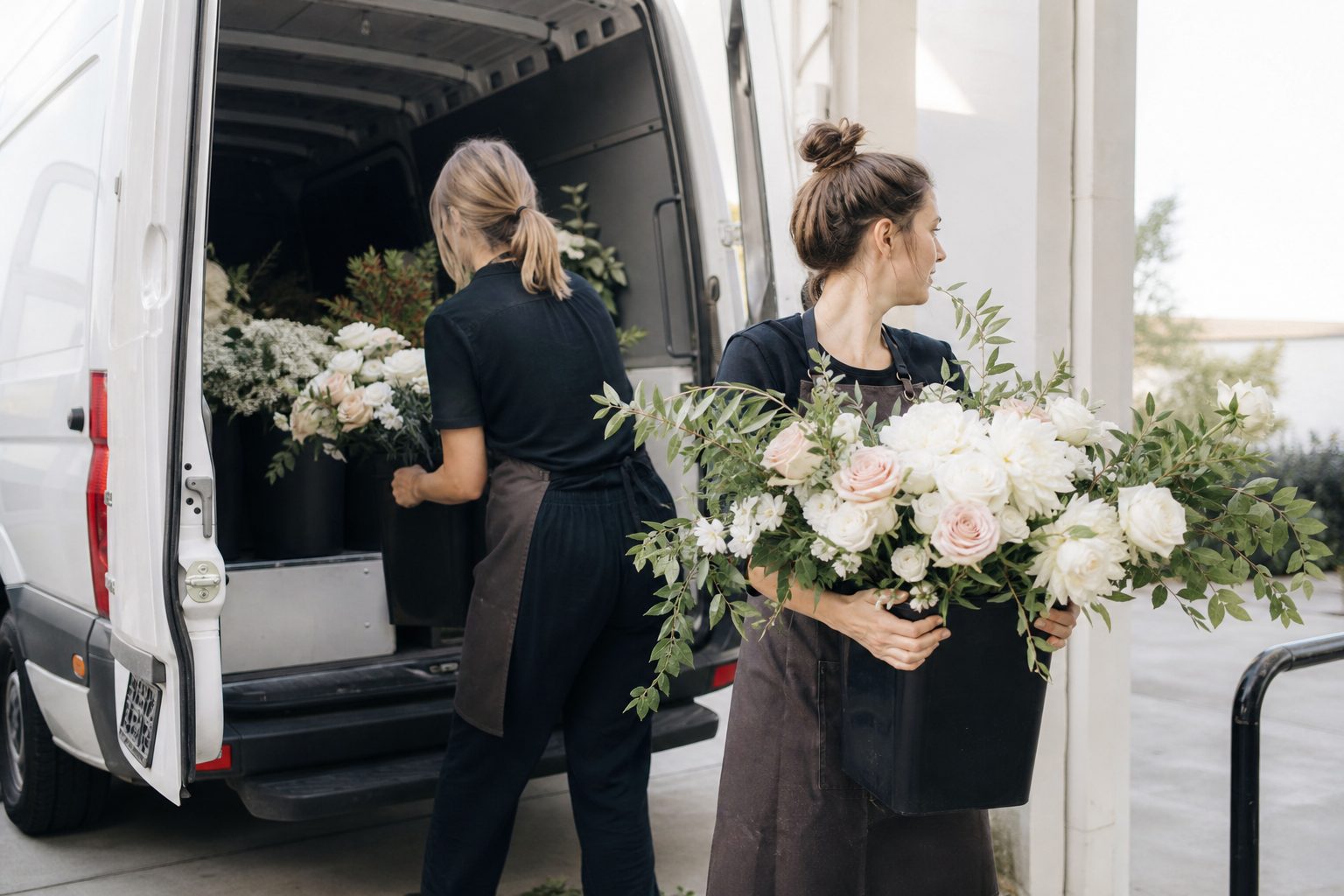
What should be on my delivery day timeline for a ceremony and reception flip?
A flip compresses install, strike and reset into a narrow window. This is the hour by hour checklist that keeps the crew, the venue and the buckets moving.

What markup and labor rate do I need on stems and hard goods to hit a real margin?
Wholesale cost, markup multiple, hard goods, design hours and installation labor each carry their own math. Here is how the numbers stack into a defensible wedding price.
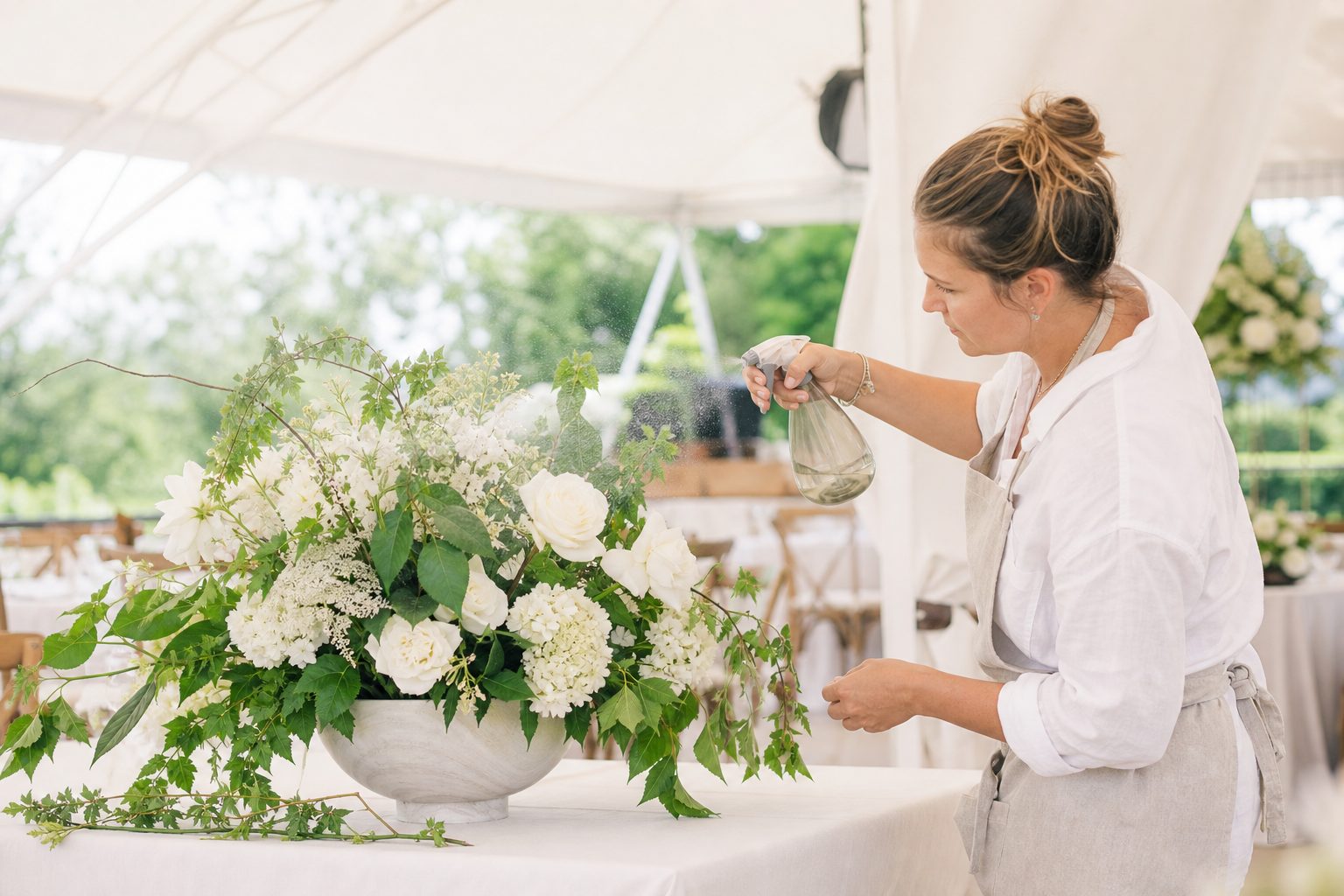
How does a summer install actually go when the venue has no cooler and no shade?
Notes from a hot outdoor build: hydration timing, which varieties collapse first, van heat management and the design choices that hold up through a full afternoon.